
Indoor Skydiving as a Sport | The Rise of Bodyflight
Many people first discover indoor skydiving as an unforgettable experience for beginners. But for another part of the community, it is also a serious sport. That raises a common question: is indoor skydiving really a sport, or is it just an activity?
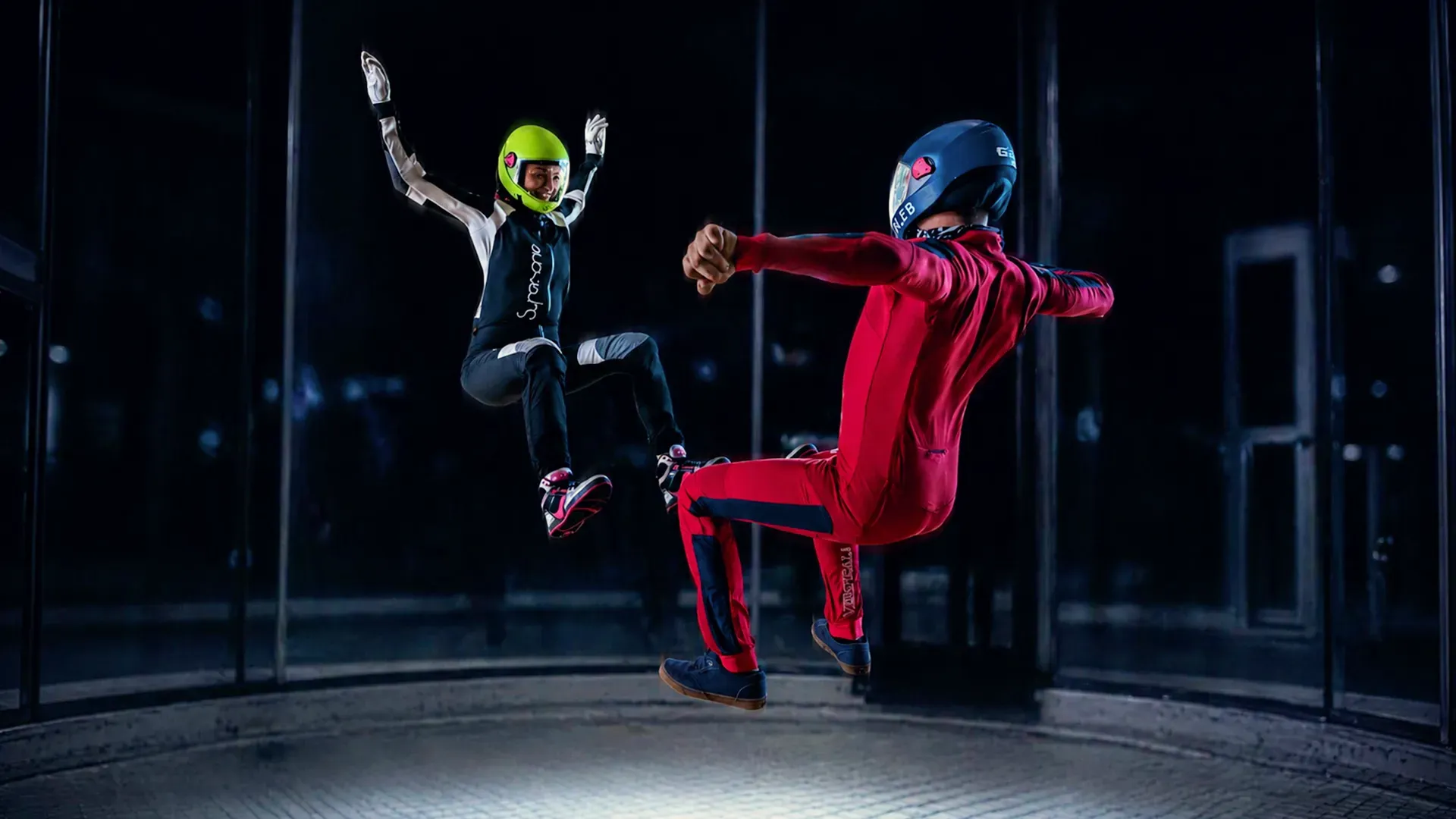
The answer is yes, indoor skydiving can absolutely be a sport. In competitive and training contexts, it is often referred to as bodyflight. Athletes use the wind tunnel to develop control, speed, precision, synchronization, and creativity in ways that go far beyond a first flight.
How indoor skydiving became a sport
Wind tunnels were originally valuable because they gave skydivers a way to train in controlled conditions. Over time, athletes began to push beyond pure skydiving practice. Instead of only simulating freefall for parachute-related training, they developed new forms of movement, performance, and technical skill inside the tunnel itself.
That shift helped create bodyflight as its own discipline. Athletes were no longer just rehearsing for another environment. They were competing in the tunnel as a primary arena.
What makes bodyflight a sport?
A sport requires more than adrenaline. It involves skill development, repeatable training, measurable performance, and often competition. Indoor skydiving checks those boxes.
Bodyflight demands:
- Strength and body control
- Precision of movement
- Spatial awareness
- Fast adjustment and reaction
- Consistent training over time
At higher levels, athletes train for disciplines that may emphasize speed, synchronization, artistic execution, or technical difficulty.
Different forms of indoor skydiving competition
One reason bodyflight is so compelling is that it allows for multiple styles of performance. Some forms are highly technical and sequence-based. Others are more creative and expressive.
Common areas of focus can include:
- Team-based routines and formations
- Dynamic movement across the tunnel
- Freestyle performance
- Vertical flight control
- Skill progression for youth and advanced flyers
To outside observers, it may look almost effortless. In reality, those movements require intense body awareness and practice.
Why iFLY matters to the growth of the sport
As indoor skydiving grew, athletes needed access to reliable training environments. A broader tunnel network made that more possible. Consistent facilities, coaching opportunities, camps, and events all helped support the growth of bodyflight as a real sport rather than a fringe activity.
That matters because sports grow when people can:
- Discover them easily
- Train regularly
- Learn from experienced coaches
- Compete within shared standards
- See a pathway from beginner to advanced participant
Indoor skydiving expanded as a sport in part because those conditions became more available.
Why beginners should care about the sport side
Even if a guest never plans to compete, the sport side of indoor skydiving still matters. It helps explain why the activity can be so captivating and why repeat flyers come back again and again.
When people realize that bodyflight includes genuine progression, they start to see indoor skydiving differently. It is not just a one-time thrill. It is an activity with depth.
For kids and adults alike, that can be inspiring. A first flight can become:
- A recurring hobby
- A coached development path
- A youth program interest
- A gateway into advanced training
Frequently asked questions about indoor skydiving as a sport
Is indoor skydiving considered a real sport?
Yes. At the competitive level, indoor skydiving or bodyflight involves technical skill, training, coaching, and organized competition.
What is bodyflight?
Bodyflight is the practice of controlling the body in airflow inside a wind tunnel. It can be recreational, developmental, or competitive.
Do you have to be an athlete to enjoy indoor skydiving?
No. Most iFLY guests are beginners. The sport side is one dimension of indoor skydiving, not a requirement for participation.
Can kids get involved in the sport?
Yes. Some youth flyers progress from first flights into Kids Club, camps, coaching, and more advanced development depending on their interest and the local program options.
Why do athletes train in wind tunnels?
Wind tunnels allow athletes to practice movement, precision, and technique in a controlled environment with much more repetition than traditional skydiving alone.
The bottom line
Indoor skydiving is both an accessible first-time experience and a legitimate sport. That range is part of what makes it so interesting. Someone can discover flight as a fun family outing, while another person may see the same tunnel as a place to train, improve, and compete.
That overlap between beginner excitement and athletic depth is one of the strongest things about bodyflight. It is easy to try, but difficult to master. And that is often the mark of a real sport.