
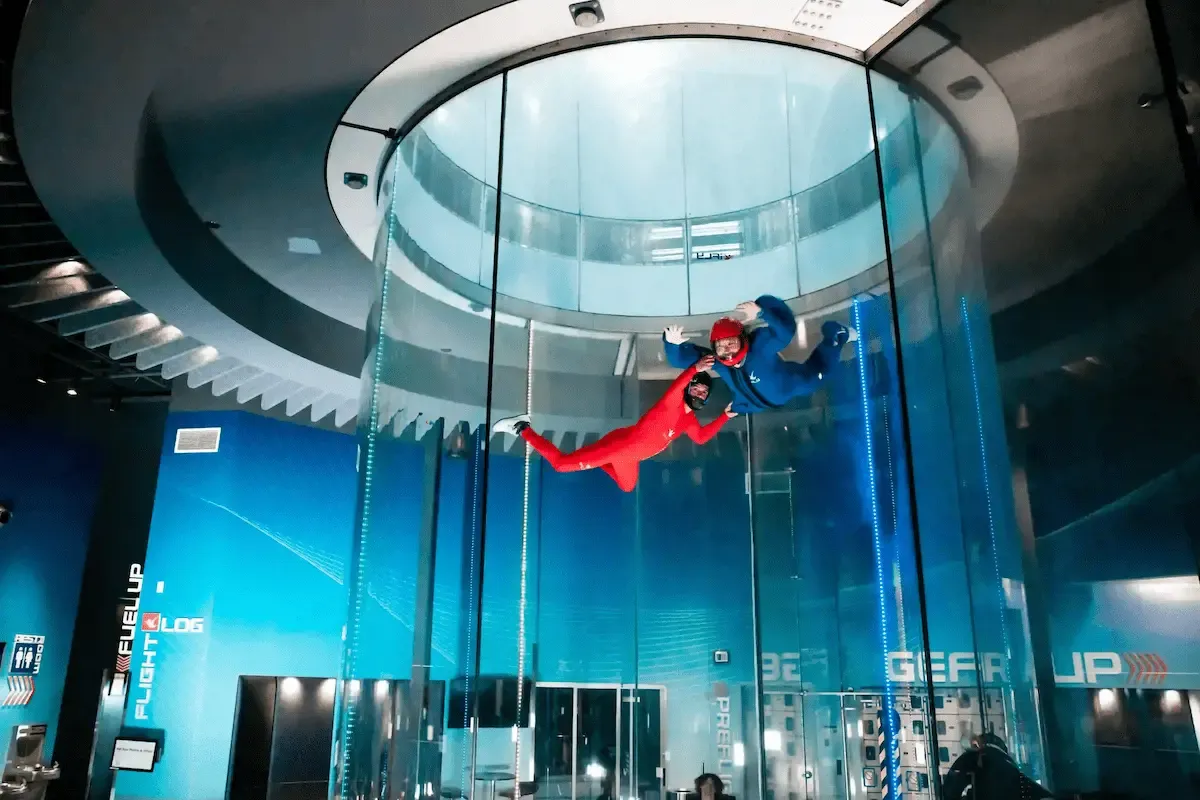
How Indoor Skydiving Works | The Technology at iFLY
When people step into the tunnel for the first time, indoor skydiving can feel almost impossible. One moment you are standing, and the next you are floating in the air. That usually leads to the same question: how does indoor skydiving actually work?
The answer starts with airflow. Indoor skydiving uses a vertical wind tunnel to create a controlled column of air strong enough to support the body. But the real story is not just that air is moving fast. It is that the airflow is engineered to be stable, consistent, and adjustable for the person flying.
How does indoor skydiving work?
At a high level, a wind tunnel moves air upward through the flight chamber. When the airflow is strong enough and the flyer is in the right body position, the air supports the body and creates the feeling of freefall.
That is why indoor skydiving feels similar to skydiving from a sensory perspective, even though the setting is completely different. You get the sensation of being lifted and balanced by air, but inside a controlled environment.
What makes the experience possible?
Several things have to work together for indoor skydiving to feel smooth and approachable.
Controlled airflow
The air needs to be powerful enough to support flight, but stable enough to avoid an unpredictable experience for beginners.
Flight chamber design
The shape and structure of the chamber matter because they influence how air moves and how comfortably people can fly.
Adjustable operating conditions
A first-time child flyer and an advanced athlete do not need the same experience. The ability to adapt conditions is a major part of what makes the tunnel useful across skill levels.
Instructor guidance
Technology matters, but so does coaching. Instructors help translate the environment into something a beginner can actually use successfully.
Air temperature control
iFLY’s technology regulates air temperature alongside airflow, keeping the tunnel comfortable and consistent regardless of outside heat or cold, so people around the world can fly year‑round without weather limiting the experience.
Why stability matters more than speed alone
People often assume indoor skydiving is mainly about wind speed. Speed matters, but stability matters more. A controlled, well-managed airflow is what helps first-time flyers feel supported instead of overwhelmed.
That is one reason indoor skydiving can work for such a wide range of guests:
- Kids having a first flight
- Adults trying something new
- Repeat visitors refining their skills
- Athletes training at a higher level
The same underlying technology supports all of those use cases because the experience is managed rather than one-size-fits-all.
Why the technology matters for guests
Most guests do not need a technical breakdown to enjoy iFLY. But understanding the technology does help answer some common questions.
Why does it feel so smooth?
Because the system is designed for controlled, stable airflow rather than chaotic air movement.
Why can beginners do it?
Because indoor skydiving is not just powered air. It is a structured environment paired with coaching and tailored operating conditions.
Why is the same tunnel used for both beginners and athletes?
Because the technology can support very different levels of performance depending on how the session is run.
More than engineering for its own sake
The best technology is not impressive only because it is advanced. It is impressive because it makes something difficult feel intuitive. That is exactly what happens at iFLY.
Behind the guest experience is a great deal of engineering, but the purpose of that engineering is simple: help people experience the feeling of flight in a way that feels accessible, repeatable, and exciting.
That is true whether the guest is:
- Flying for the first time
- Celebrating a birthday
- Returning with family and friends
- Exploring advanced bodyflight skills
Frequently asked questions about indoor skydiving technology
How does a wind tunnel keep someone in the air?
The tunnel pushes air upward through the flight chamber. When the airflow and body position work together, the air supports the flyer.
Is indoor skydiving the same as jumping from a plane?
No. The sensation of freefall is related, but indoor skydiving happens in a controlled wind tunnel environment with instructor support.
Why can beginners fly indoors?
Because the tunnel environment is engineered for controlled flight and the experience includes training and coaching.
Is the tunnel only for entertainment?
No. Wind tunnels can support first-time flights, recurring programs, athlete development, and educational experiences.
The bottom line
If you have ever wondered how indoor skydiving works, the simplest answer is this: controlled airflow makes human flight possible in a repeatable indoor environment. But the fuller answer is that technology, engineering, and instructor support all work together to make the experience feel natural enough for beginners and useful enough for advanced flyers.
That is what turns a powerful machine into something guests experience as pure flight.