
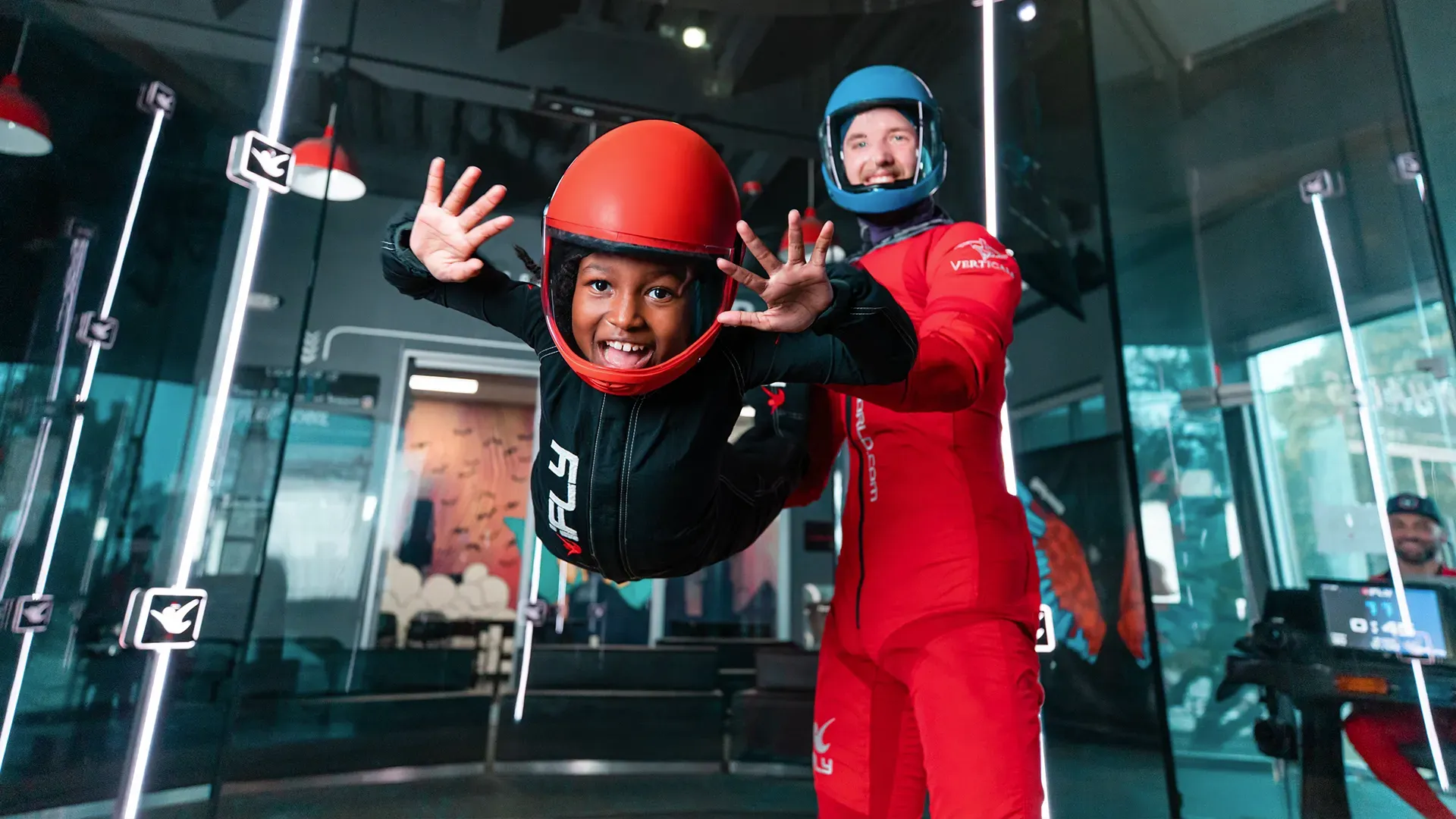
Is Indoor Skydiving Safe? Everything You Need to Know Before You Fly
Matt Ryan, CEO of iFLY Indoor Skydiving ·
Indoor skydiving is one of the most common “bucket list” experiences people consider—but the first question most ask is simple:
Is indoor skydiving safe?
Short answer:
Yes—indoor skydiving is considered a safe, controlled activity when operated by trained professionals in a regulated environment like iFLY.
Unlike traditional skydiving, indoor skydiving removes many of the highest-risk variables—while adding structure, supervision, and safety systems at every step.
Why indoor skydiving is considered safe
Indoor skydiving takes place inside a vertical wind tunnel, where airflow is precisely by trained professionals controlled to simulate freefall.
This controlled environment eliminates many of the risks associated with outdoor skydiving:
- No aircraft or parachutes
- No weather-related variability
- No high-altitude exposure
- No unpredictable landing conditions
Instead, every flight happens:
- At ground level
- Under constant instructor supervision
- Within a carefully engineered airflow system
What safety measures are in place at iFLY?
At iFLY, safety isn’t a feature—it’s the foundation of the entire experience.
1. Highly trained instructors
All flights are guided by professional instructors trained and certified through the International Bodyflight Association (IBA).
They are responsible for:
- Controlling your stability in the tunnel
- Adjusting airflow to your skill level
- Providing hands-on support during flight
2. Structured pre-flight training
Before entering the tunnel, every flyer receives:
- A safety briefing
- Body position instruction
- Clear communication signals
This ensures you understand exactly what to expect before you fly.
3. Controlled flight environment
Unlike outdoor skydiving, every variable inside the tunnel is controlled:
- Wind speed is adjusted to the individual
- Flight sessions are short and monitored
- Instructors remain within arm’s reach
This makes indoor skydiving predictable and repeatable, which is key to safety.
4. Professional equipment
All flyers are equipped with:
- Flight suit
- Helmet
- Goggles
- Ear Protection
Each piece of equipment is designed to maximize:
- Comfort
- Stability
- Protection
5. Continuous safety monitoring
iFLY operates with:
- Standardized operating procedures
- Ongoing safety audits
- Continuous instructor training and evaluation
Safety is actively managed—not assumed.
Is indoor skydiving safer than traditional skydiving?
Yes—in general, indoor skydiving is considered significantly lower risk than traditional skydiving.
Here’s why:
Factor Indoor Skydiving Traditional Skydiving
Environment Controlled Variable
Altitude Ground level 10,000+ feet
Weather impact None High
Instructor proximity Constant Limited
Equipment dependency Minimal High
By removing altitude, weather, and parachute deployment from the equation, indoor skydiving creates a much more controlled experience.
Can kids do indoor skydiving safely?
Yes—indoor skydiving is widely considered safe for children when supervised properly.
At iFLY:
- Children fly with direct instructor support
- Wind speeds are adjusted for smaller body types
- Safety briefings are tailored for age and understanding
This is one of the reasons indoor skydiving is popular for:
- Family outings
- Birthday parties
- Youth programs
What are the risks of indoor skydiving?
Like any physical activity, indoor skydiving carries some level of risk, but incidents are uncommon and typically minor.
Potential risks may include:
- Minor bumps or contact with the tunnel wall
- Muscle strain if body position isn’t followed
- Fatigue from holding position
These risks are minimized through:
- Instructor guidance
- Clear training
- Controlled flight conditions
Who should not do indoor skydiving?
Indoor skydiving is safe for most people, but you should check with a professional if you have:
- Neck, back, or shoulder injuries
- Recent surgery
- Heart conditions
- Pregnancy
iFLY teams provide clear guidance to ensure safety for every guest.
Why people trust iFLY
Safety is the reason millions of people choose iFLY for their first flight.
iFLY has built its reputation on:
- Instructor-led experiences
- Consistent global safety standards
- A controlled, repeatable environment
- A culture where safety comes first
This is what makes flight accessible—not just exciting.
The bottom line: Is indoor skydiving safe?
Yes.
Indoor skydiving is a safe, structured, and professionally guided experience designed to make the sensation of flight accessible to almost everyone.
At iFLY, safety is not just part of the experience—it is the reason the experience is possible.
FAQ: Indoor Skydiving Safety
Is indoor skydiving dangerous?
No. It is considered a low-risk activity when conducted in a controlled environment like iFLY.
Do you fall during indoor skydiving?
No. The airflow supports your body, allowing you to float safely.
Are instructors with you the whole time?
Yes. Instructors are always present and actively guiding your flight.
Has anyone been seriously injured indoor skydiving?
Serious incidents are rare. Safety systems and instructor supervision significantly reduce risk.