
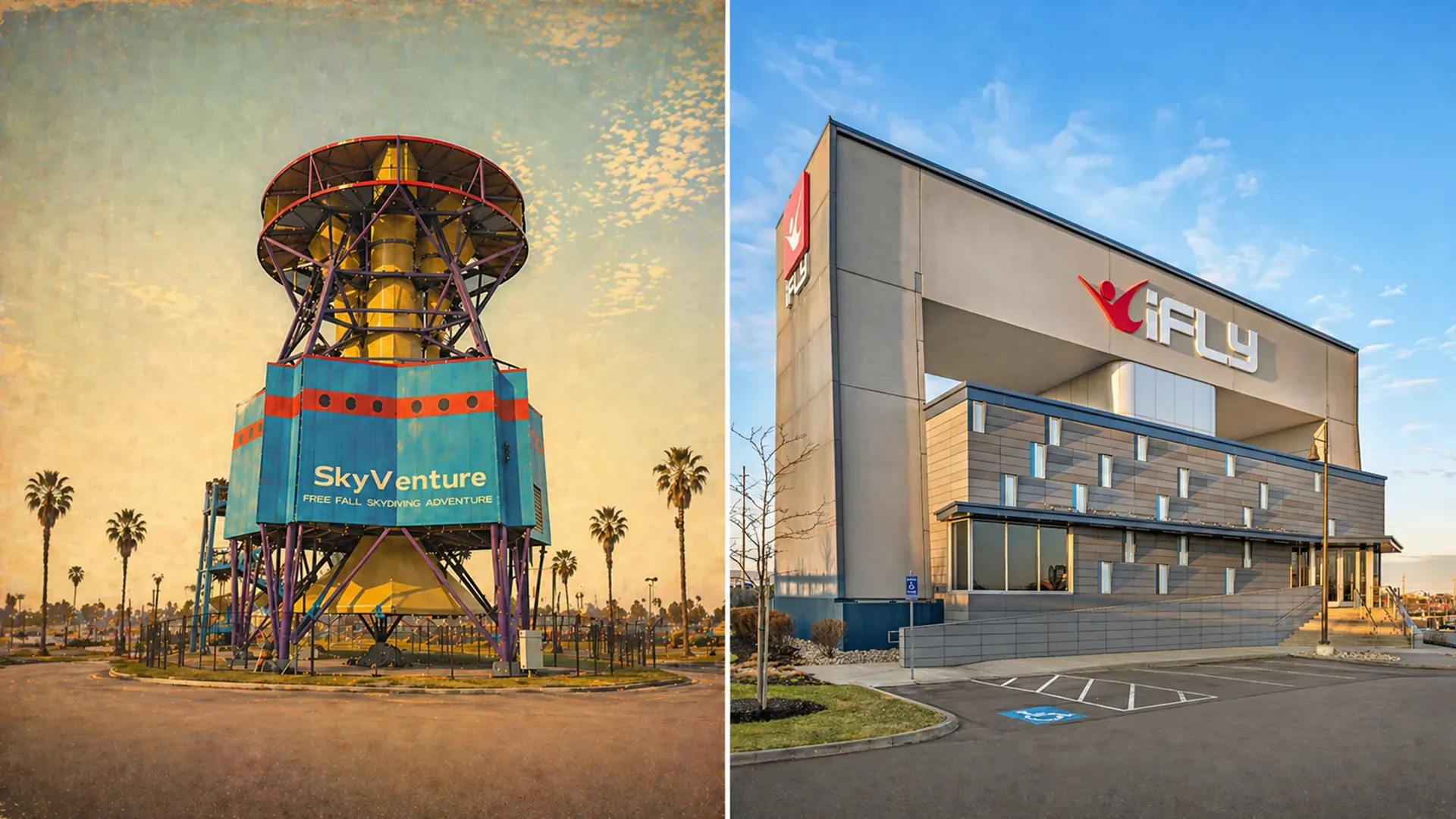
The History of iFLY Indoor Skydiving | Since 1999
Indoor skydiving didn’t start as a family activity—it started as a scientific and training breakthrough.
Today, millions of people experience the sensation of flight every year at iFLY. But the journey from specialized wind tunnels to a global, accessible experience is what makes this story remarkable.
At the center of that journey—and the foundation of everything iFLY does—is one principle: safety comes first.
What is indoor skydiving and where did it start?
Indoor skydiving began with vertical wind tunnel technology, originally developed for:
- Aerodynamic research
- Military and aviation testing
- Training skydivers to improve freefall control
By recreating the airflow of freefall, wind tunnels allowed athletes to train in a controlled, repeatable environment—something traditional skydiving could not offer due to weather, altitude, and aircraft limitations.
That same control would later become essential—not just for performance, but for delivering a safe, consistent experience to a much broader audience.
How did iFLY change indoor skydiving?
iFLY transformed indoor skydiving from a specialized training tool into a mainstream experience.
The key innovation wasn’t just technology—it was accessibility built on a foundation of safety.
iFLY introduced:
- Instructor-led first flights for beginners
- Standardized safety systems and operating procedures
- Highly trained, certified instructors
- A repeatable, high-quality guest experience
Every element of the experience was designed so that first-time flyers could participate with confidence, support, and safety at every step.
Why is indoor skydiving considered accessible?
iFLY removed the biggest barriers associated with traditional skydiving:
- No airplane required
- No parachute needed
- No prior experience necessary
- Minimal time commitment
Guests can arrive, complete training, and fly within minutes.
But accessibility only works when paired with trust. That’s why iFLY’s model is built on clear instruction, controlled environments, and rigorous safety standards, ensuring guests feel comfortable from the moment they walk in.
Who is indoor skydiving for?
Indoor skydiving evolved into a multi-audience experience:
- Families looking for shared experiences
- Kids and first-time flyers trying something new
- Groups and events celebrating milestones
- Students learning STEM concepts in real time
- Athletes training in precision bodyflight
Safety is what makes this broad participation possible. From young flyers to elite athletes, every experience is supported by structured training and professional supervision.
How did iFLY help grow the global category?
As iFLY expanded globally, it helped standardize indoor skydiving as a trusted experience.
That consistency matters because:
- First-time flyers need confidence and reassurance
- Families expect safe, predictable experiences
- Athletes require reliable, controlled environments
By building a globally consistent operating model grounded in safety, iFLY made indoor skydiving easier to understand, trust, and scale.
Is indoor skydiving just entertainment?
No—indoor skydiving spans multiple use cases:
Recreation
For many guests, iFLY delivers their first real experience of human flight—in a safe, controlled setting.
Sport
Indoor Skydiving is also a thriving competitive sport that is part of the World Air Sport Federation and attracts global participation. IFLY has been at the heart of this development and in 2014, hosted the first ever Indoor Skydiving World Cup in Austin. Since those days it has gone from strength to strength and was even presented as an Olympic hopeful in Paris in 2024.
Education (STEM)
Wind tunnels make concepts like lift, drag, airflow, and force tangible—while maintaining a safe environment for hands-on learning.
Why is indoor skydiving so popular today?
Indoor skydiving combines three powerful elements:
- The real sensation of flight
- A memorable, shareable experience
- An accessible and safe format for all ages and abilities
Safety is what enables all three—turning what could be extreme into something approachable and repeatable.
Frequently asked questions about the history of iFLY
Was indoor skydiving originally created for entertainment?
No. Wind tunnels existed before iFLY. However, iFLY defined and scaled the modern indoor skydiving experience for mainstream audiences.
Did iFLY invent indoor skydiving?
No. Wind tunnels existed before iFLY. However, iFLY defined and scaled the modern indoor skydiving experience for mainstream audiences.
Is iFLY only for beginners?
No. iFLY serves first-time flyers, but also supports athletes, youth programs, and advanced training.
How safe is indoor skydiving?
iFLY operates with highly trained, IBA-certified instructors, standardized procedures, and rigorous safety systems, creating a controlled environment where guests can fly with confidence.
The Bottom Line
The history of iFLY is the story of how human flight became accessible—and safe—for everyone.
What began as a technical training tool evolved into a global experience that now serves:
- Families
- Schools
- Athletes
- First-time adventurers
That evolution was only possible because safety was never an afterthought—it was the foundation.
iFLY didn’t just grow the category—it made flight something people can experience with confidence, trust, and excitement.