
Indoor Skydiving for Beginners: What to Expect on Your First Visit
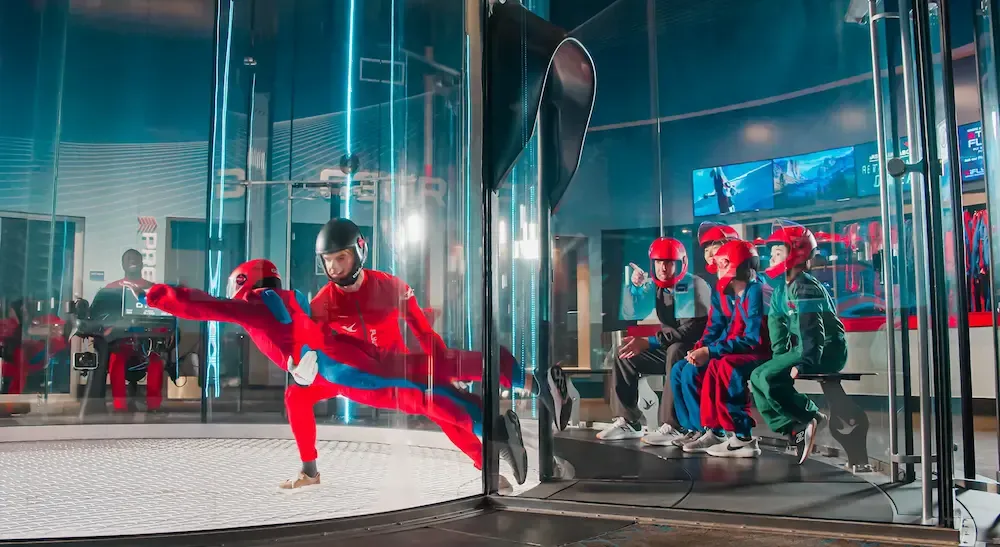
At iFLY, your first indoor skydiving flight starts with both feet on the floor. Your instructor gives the signal, you lean through the tunnel doorway, and a wall of air catches your whole body. For a second, the wind feels stronger than you expected. Then your feet lift and you realize you are not falling. The air is holding you up.
There is no ledge, parachute, or stomach-dropping plunge. You enter at floor level with an instructor beside you, using the body position and hand signals you learned a few minutes earlier. The tunnel is loud and the airflow is powerful, but you are never left to figure it out alone.
Your first flight lasts 60 seconds. Here’s what those seconds feel like, what happens before you enter the tunnel, and how to get ready to fly.
What to know before your first iFLY visit:
- Plan to arrive at least 10 minutes before your scheduled session.
- Plan to spend about 90 minutes at iFLY, from check-in through wrap-up.
- Wear comfortable clothes, preferably athletic wear, and properly fitting lace-up sneakers.
- Secure long hair in a low bun or braid so your helmet fits properly.
- First-time packages include training, flight gear, and instructor assistance.
- Each flight lasts 60 seconds. Your package determines how many flights you receive.
- Children as young as 3 can fly, and anyone under 18 needs a parent or guardian to sign their waiver.
What does indoor skydiving actually feel like?
Indoor skydiving feels like steady pressure from fast-moving air across your whole body. The airflow presses against your suit, cheeks, and hands, and responds to small changes in the angle of your chin, arms, and legs. Once your body settles into position, the air feels less like wind hitting you and more like something you can balance on.
The tunnel is noisy, so you communicate through the hand signals covered during training. Breathing still works normally. In its answers to common first-time questions, iFLY compares it to putting your head out of a car window: you can breathe through your mouth or nose while the air moves across your face.
During the first few seconds, beginners sometimes stiffen or make a large movement to correct a small wobble. The wind responds quickly. Your instructor uses the flight-suit handles to guide you, and a slight adjustment to your chin, arms, or legs can change your balance. One small correction clicks, your position settles, and you are flying.
iFLY instructors often hear guests say that everything else disappears when their feet leave the flight deck. Supported entirely by the wind, they describe complete freedom and joy, almost like getting to be a superhero for a moment.
What happens during your first indoor skydiving visit?
1. Arrive and check in
iFLY recommends arriving at least 10 minutes early. Staff will confirm your reservation and waiver, which you can complete in advance using the link in your booking confirmation. Flyers under 18 need a parent or guardian to sign their waiver. First-time flyers train and move through the session as a group, although each person flies individually. Because the group starts together, arriving late can mean missing your session.
2. Learn how to use your body in the wind
Every first-time flyer watches a required preflight video. Your instructor explains the basic flying position and demonstrates the hand signals used inside the tunnel.
You only need to recognize a few directions and respond to one at a time. Pay attention to the signals for your chin, arms, and legs. They are how you and your instructor communicate inside the tunnel, where the wind is too loud for conversation.
3. Suit up
You will put a flight suit over your clothes and receive the required protective gear. Remove jewelry, hair accessories, and everything from your pockets. Long hair needs to be secured in a ponytail, braid, or bun low enough for the helmet to fit. Staff checks your gear before you enter the staging area.
4. Step into the tunnel
This is the moment you came for. First-time flyers enter one at a time with an instructor in the flight chamber. You walk to the doorway, follow the position you practiced, and lean into the airflow.
The wind takes your weight immediately. Your instructor steadies you while you adjust to the pressure and sound. Then you follow your instructor’s signals, making small changes to your body position that help you move and stay balanced in the airflow.
Each flight lasts 60 seconds, though it can feel shorter when every sensation is new. On your next flight, you return knowing what the airflow feels like and where you want to improve.
5. Review the flight and decide what comes next
After the session, return your gear, view available photos or video, and ask your instructor what to focus on next time.
Five first-time indoor skydiving tips
1. Listen closely during training
Watch how your instructor demonstrates each signal during training. Inside the tunnel, look toward your instructor so you can see the next direction and keep your chin in position.
2. Relax without going limp
“Relax” means releasing tension you do not need. Unclench your fists, lower your shoulders, and avoid locking your knees. Hold the position from training without trying to brace against the wind.
3. Make small adjustments
A slight change in your body position can be enough. Follow one signal at a time and give each adjustment a moment to work instead of trying to fix every wobble yourself.
4. Breathe normally
Strong air across your face can make you think you need to hold your breath. You do not. Breathe through your mouth or nose, just as you practiced before entering.
5. Give your next flight one job
On a later flight, choose one correction and concentrate on it. Maybe you keep your chin up, soften your legs, or respond faster to a signal. Feeling one adjustment work is a better goal than trying to look like an experienced flyer in your first few minutes.
What to wear to indoor skydiving
Wear comfortable clothes that fit under a flight suit, preferably athletic wear, pants, and a shirt without a collar. Choose properly fitting lace-up sneakers that cannot come loose in the tunnel.
Before flying, remove jewelry and empty every pocket. Secure long hair in a low ponytail, braid, or bun so the helmet fits correctly. Goggles that fit over eyeglasses are available. Lockers are available, but leaving valuables at home is simpler.
What parents should know before bringing a child
Children can fly starting at age 3. Prepare them for strong wind and a loud tunnel, and explain that an instructor will stay beside them. Watching another flyer first can make the gear, doorway, and airflow look familiar.
Flyers enter the tunnel and fly one at a time, even when families attend in the same group. Parents and siblings can watch from the observation area while the instructor works with each flyer.
A parent or guardian must sign for anyone under 18. Contact your local tunnel before booking with questions about medical conditions, physical needs, or support for a nervous flyer.
First-time indoor skydiving questions
Do I need experience or unusual strength?
No. First-time packages include training, and body position matters more than strength. Your instructor teaches the starting position and stays with you during each flight.
Will I feel a stomach drop?
No. You enter at floor level and are supported by air moving upward, with no jump or sudden downward acceleration.
How old do you have to be?
iFLY accepts flyers starting at age 3, with no upper age limit. Anyone under 18 needs a parent or guardian to sign the waiver. Health, weight, and physical restrictions apply, so review iFLY’s current flight policies or contact your local tunnel if you are unsure.
Is indoor skydiving safe?
Yes. iFLY maintains high safety standards through established protocols, required preflight instruction, protective equipment, and certified, highly trained instructors who stay with each first-time flyer. Guests who are pregnant or weigh more than 300 pounds cannot fly. Guests between 260 and 300 pounds should contact their local iFLY before booking to confirm accommodation. Some medical conditions may prevent participation, so contact your local iFLY if you are unsure.
How long does a first visit take?
Plan for about 90 minutes total. Each flight lasts 60 seconds, and your package determines how many flights you receive.
What happens if I cannot hold the right position?
Your instructor uses the flight-suit handles and hand signals to steady your position and guide each adjustment. First-time flyers are expected to need help.
Can I take my phone, GoPro, or Meta glasses into the wind tunnel?
Phones and GoPros are not permitted in the wind tunnel or flight chamber area, whether you are flying or watching. Regular and Meta glasses are allowed when the protective goggles and helmet fit securely over them; many Meta models use prescription lenses. iFLY records flights, and photos and videos are available to view after the session and purchase as digital downloads.
Ready to feel the air lift you?
You do not need to arrive knowing how to fly. Bring lace-up sneakers, wear comfortable clothes, and watch for the hand signals. Your instructor will help you every step of the way while you get used to the wind.
Then your feet leave the floor, the air catches your body weight, and the idea of indoor skydiving becomes a 60-second flight of your own.